Home › Asphalt Pathways, Sidewalks, and Trails
Precision Asphalt Atlanta performs asphalt pathway paving in Atlanta, GA for parks, schools, business campuses, and communities. We build multi use trails, walking loops, and connector paths that are smooth, accessible, and low maintenance. Thoughtful layout and proper drainage help paths last while providing comfortable use for pedestrians and cyclists.
Precision Asphalt Atlanta provides professional asphalt pathway paving throughout Atlanta, GA, Georgia and the surrounding area. Our licensed, insured crew delivers safe, clean, on-time work with a free estimate before anything begins. Call (470) 683-6069 or request your free quote.
Durable Asphalt Pathways, Sidewalks, and Trails in Atlanta
Asphalt pathway paving is not just for big roads. In Atlanta it is one of the most practical ways to build clean walking routes through neighborhoods, business parks, schools, church properties, and HOA common areas. Precision Asphalt Atlanta focuses on smaller-scale pedestrian work that still needs roadway-level durability.
When we look at a sidewalk, trail, or pathway project, we start by asking how it will be used. A light residential sidewalk that only sees foot traffic can be built differently than a multi-use path behind an apartment complex that will see bikes, golf carts, and the occasional landscaping truck. Local codes in Atlanta and nearby counties may also require certain widths or ADA accommodations. We factor all of this into the design so the path does not rut, crack, or hold water after the first hard Georgia summer.
Asphalt has some advantages over concrete for walkways in our climate. It is more forgiving over the clay soils that swell and shrink in metro Atlanta. It tends to show fewer trip hazards from slab lifting, and if a section is damaged, we can cut and patch it without replacing long runs. For customers trying to connect buildings, parking areas, or recreational spaces, asphalt can follow curves and grade changes smoothly, which is important on hilly Atlanta sites.
Our crews are used to working in tight access areas, like behind buildings, around playgrounds, or within established landscaping. We bring the right size equipment so we do not tear up existing grass or crack nearby driveways while we work. The goal is to leave you with a clean, usable path network, not a jobsite that takes weeks to recover.
How We Build Long-Lasting Asphalt Paths and Sidewalks
For asphalt pathway paving to hold up in Atlanta, the base is everything. Precision Asphalt Atlanta starts every job with layout and grading. We mark the path, check elevations, and set slopes so water will shed to grass or drainage features instead of running along the path and eroding edges. A typical slope is around 1.5 to 2 percent, but we adjust to match existing grades and ADA rules where needed.
Once the layout is set, we excavate to the required depth. For most pedestrian-only paths, we remove 6 to 8 inches of soil. On multi-use trails that will see service carts or light vehicles, we often go 8 to 10 inches. In many Atlanta neighborhoods you will find red clay or mixed fill dirt. If this material is soft or pumping under the equipment, we undercut it and replace it with crushed stone. Skipping this step is one of the main reasons cheap paths crack and settle.
We then install a compacted aggregate base, usually graded aggregate base (GAB) or crusher run. It is placed in lifts and compacted with a roller or plate compactor where access is tight. For walkways we typically use 4 to 6 inches of compacted stone. On steeper hillsides or wet backyards, we may recommend geotextile fabric under the stone to separate it from the clay and reduce future movement.
With the base in place, we pave with hot mix asphalt. For pedestrian paths only, a 1.5 to 2 inch surface course can work. For shared-use trails or service paths, we often recommend 2 to 3 inches or a two-lift system (a base course and a finer surface course) for strength. The mix design is chosen for local conditions, usually a fine-graded mix that gives a smoother walking surface and good compaction.
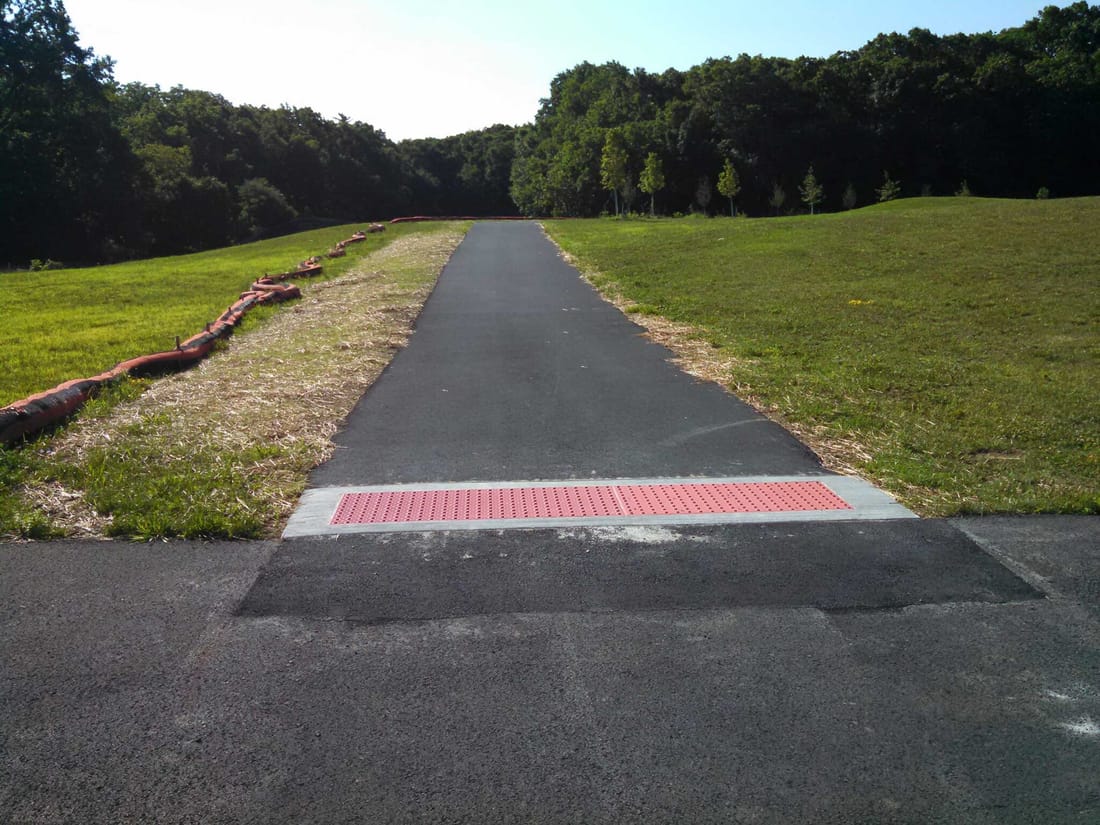
Edges are compacted carefully so they do not ravel or break down when people step off the path. Where the path meets existing concrete, parking lots, or streets, we create smooth transitions so wheelchairs, strollers, and bikes can cross without a bump. After compaction, we typically recommend a curing period before heavy use so the surface can cool and harden.
Design Options for Sidewalks, Trails, and Recreational Paths
Not every asphalt pathway has to look the same. Precision Asphalt Atlanta can vary width, alignment, and finish to fit how the path will be used and how it should look on your property.
For residential sidewalks or HOA walking loops, paths are often 4 to 6 feet wide. Multi-use trails that share space with bikes or golf carts often run 8 to 10 feet. On school campuses and near playgrounds, we may flare or widen certain areas to create passing zones or small gathering spots. In parks or natural areas, we can follow gentle curves to work around trees and slopes instead of cutting everything straight.
We also pay attention to surface texture. Fresh asphalt has some grip, which is important during wet Atlanta summers and occasional winter freezes. If a path will be used by a lot of joggers or seniors, we can aim for a slightly finer finish for comfort without making it slick. On steeper sections, cross slopes and small landings help control speed and improve safety.
Color and markings are another area where asphalt paths can be customized. While standard asphalt is black, it lightens over time. If you need clear separation for bikes and pedestrians, we can stripe centerlines or edge lines. At schools or apartment complexes, we can mark crosswalks where the path meets parking or roads. Reflective markings and bollards can be used to control vehicle access while keeping the route open for walkers and bikes.
We design to ADA guidelines when ramps, street crossings, or building access are involved. That means careful attention to maximum slopes, landing areas, and transitions at curb ramps. For properties in the city of Atlanta or surrounding jurisdictions like DeKalb, Cobb, or Fulton County, we can align the path layout with local standards so you do not run into hang-ups during inspections.
Costs, Local Conditions, and Common Issues in Atlanta
Pathway and sidewalk pricing in Atlanta depends mainly on three things: base preparation, thickness, and access. Precision Asphalt Atlanta gives itemized estimates so you can see where the money is going instead of one lump number.
Base preparation is the biggest swing factor. If your route runs over firm, well-drained ground, we may only need standard excavation and GAB stone. If the path crosses low spots that stay damp after rain, or fill dirt behind retaining walls, we may need deeper excavation, fabric, or extra stone. This adds cost upfront but avoids constant patching later. We will point out these areas during the site walk so you can decide how you want to handle them.
Asphalt thickness is tied to how the path will be used. A light-use backyard walkway can be built more economically than a commercial trail that sees utility vehicles and delivery carts. Cutting thickness to save money usually backfires within a few years in our climate, especially where the red clay expands and contracts. We will explain where a thinner section is acceptable and where it is not.
Access affects labor and equipment time. A straight shot from the street behind a shopping center is simple. A path behind homes, across narrow gates, or down steep slopes might require smaller machines or extra handwork. In some Atlanta infill neighborhoods, tight side yards mean we have to stage material in phases so we do not block neighbors or damage mature landscaping. We plan this in advance and schedule work to minimize disruption.
Common issues on older asphalt paths in metro Atlanta include edge cracking from poorly supported sides, tree root heaving, and standing water in low spots. When we replace or extend existing paths, we look at these problems first. Sometimes we can fix them with targeted milling and overlay. Other times a failing section needs a full-depth rebuild. We will tell you which is which instead of just recommending the most expensive option.
Maintenance, Repairs, and When to Resurface
Asphalt pathways, sidewalks, and trails in Atlanta handle a lot of temperature swing, UV exposure, and periodic heavy rain. With basic care, a well-built path from Precision Asphalt Atlanta can last many years before major work is needed.
Routine maintenance starts with keeping edges clean. Grass and soil that build up along the sides hold moisture and start to break down the asphalt. Simple edging and clearing debris after storms can extend the life of the surface. For longer runs in shaded or wooded areas, keeping leaves and mulch off the path helps stop organic material from holding water against the pavement.
Sealcoating is sometimes used on walkways, especially in commercial settings where appearance matters. We generally do not recommend sealing brand-new paths immediately. The asphalt should cure for several months so light oils can work out. After that, a quality sealer can help slow oxidation and give a more uniform color. It should be applied carefully with attention to traction so the surface is not slick when wet.
For repairs, small cracks and isolated holes can usually be addressed with crack filling or patching instead of full replacement. When we patch, we saw cut around the damaged area, remove compromised base if needed, and tie back into solid asphalt. This helps avoid the patch sinking or raveling. On longer runs with widespread hairline cracking, a mill and overlay (grinding off the top layer and placing new asphalt) can restore the surface without touching the base.
You will know it is time to consider resurfacing or replacement when you see widespread alligator cracking (a series of small interconnected cracks), frequent puddling, or sections that feel soft underfoot. In these cases, we will core or probe the base in a few spots to see whether we can save it or if the structure below has failed. Because we work all over the Atlanta area, we are familiar with how different local soils and older construction practices behave, which helps us choose the right fix instead of treating every path the same.