Home › Parking Lot Sealcoating & Maintenance
Precision Asphalt Atlanta delivers parking lot sealcoating in Atlanta, GA to protect commercial pavement from sun, water, and chemicals. We clean your lot, seal cracks, and apply commercial grade sealer for a like new appearance. Regular maintenance programs help you budget repairs, reduce liability, and extend the life of your asphalt investment.
Precision Asphalt Atlanta provides professional parking lot sealcoating throughout Atlanta, GA, Georgia and the surrounding area. Our licensed, insured crew delivers safe, clean, on-time work with a free estimate before anything begins. Call (470) 683-6069 or request your free quote.
Parking lot sealcoating in Atlanta that is actually built for our climate
Parking lots in metro Atlanta take a beating from summer heat, sudden storms, and heavy traffic. If your asphalt is fading gray, starting to ravel, or showing hairline cracks, it is already losing protection. Precision Asphalt Atlanta focuses our parking lot sealcoating around how pavement behaves in North Georgia weather, not a one-size-fits-all formula.
Sealcoating is a thin, protective layer that shields your asphalt from UV rays, rain, oil spills, and daily wear. On a commercial lot it is not just cosmetic. A good sealcoat keeps water and chemicals out of the pavement structure so you avoid early cracking and potholes. Most of our Atlanta clients, from small retail centers to churches and medical offices, see a clear pattern: lots that are sealed every 2 to 3 years last significantly longer before needing major repairs or full milling and repaving.
We schedule work around your peak business hours and traffic flows. For example, for restaurants we often seal in the early morning and open sections in phases so evening service is not disrupted. For office parks and industrial sites we commonly work weekends. Every lot is planned differently so customers, delivery trucks, and emergency access can move safely while the sealer cures.
How Precision Asphalt Atlanta actually performs sealcoating on your lot
A durable sealcoat job is mostly about the preparation. Precision Asphalt Atlanta starts with a site walk to flag drainage issues, standing water, or structural failures. If we see soft spots, base failure, or alligator cracking, we will recommend patching or milling before sealcoating. Putting sealer over a failing area only hides the problem for a short time, then the patch costs more later.
On sealcoat day we block off the work area with cones, barricades, and clear signage. Our crew uses blowers and steel brooms to remove loose debris, dust, and leaves. Oil spots are scrubbed and primed with an oil spot primer so the new sealer will bond. If needed, we pressure wash heavily stained sections. Any cracks that are wide enough to accept material are cleaned and filled with a hot or cold pour crack sealant, depending on traffic level and budget. This step controls water intrusion, which is the main cause of pavement breakdown in Atlanta’s wet seasons.
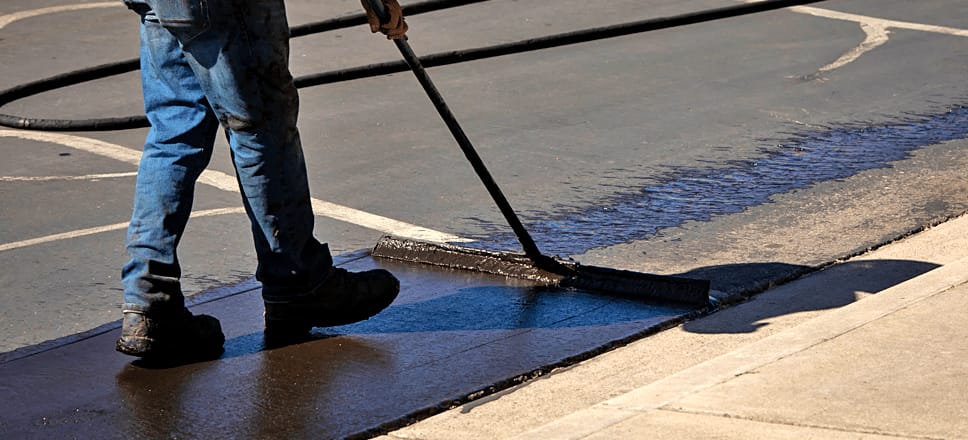
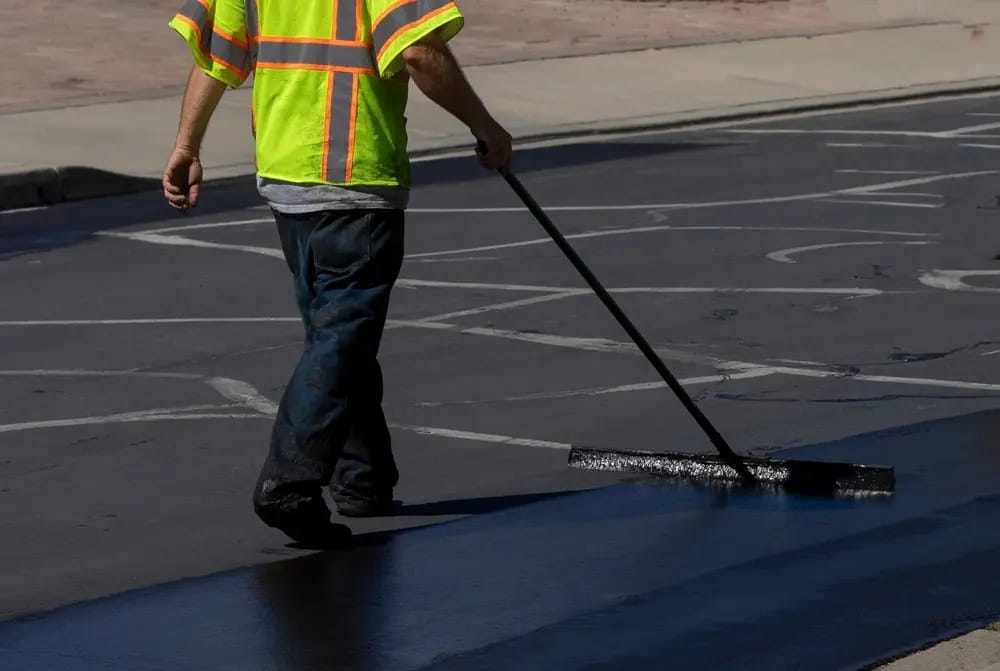
We typically use a refined coal tar or asphalt emulsion sealer that complies with local regulations and your property requirements. For some HOAs, schools, and health care facilities that restrict coal tar, we specify low odor, asphalt emulsion sealers. The sealer is mixed to manufacturer specs, then applied with a combination of spray rigs and squeegee machines. Squeegees push the material into surface voids, while spraying gives an even final appearance. Most commercial lots get two coats, applied in opposing directions, to avoid thin spots and streaking.
After application, we allow proper cure time. In Atlanta’s humidity, light foot traffic is usually safe in 4 to 6 hours, but we recommend 24 hours before regular vehicle traffic on most commercial lots. Heavier truck lanes may need slightly longer. We remove traffic controls only when the surface is ready so you are not guessing about when to reopen.
Parking lot maintenance that prevents bigger repair bills
Sealcoating is one part of a maintenance plan, not the whole thing. Precision Asphalt Atlanta helps owners set up a simple schedule that keeps costs predictable instead of reacting to emergencies. For many local clients we combine sealcoating with crack sealing, pothole repair, and periodic re-striping so the entire lot wears evenly.
Crack sealing is especially important in our region. Temperature swings and traffic cause small cracks to open and close. Once they are wider than about a quarter inch, water starts reaching the asphalt base. We clean these cracks and apply a flexible sealant that expands and contracts with the pavement. Done before sealcoating, this step can add years to the life of your surface.
We also recommend a yearly inspection, even if you are not ready for a full sealcoat. In that visit we look for raveling (loose gravel on top), edge breakdown, ponding water after rain, and early alligator cracking. Owners of shopping centers and apartment communities often appreciate this because it lets them plan capital budgets. Instead of being surprised by a failed area that needs full-depth replacement, they can see issues coming 1 to 3 years in advance.
Re-striping is usually scheduled right after sealcoating. A fresh black surface is the best canvas for bright, high contrast pavement markings. That means easier navigation, better ADA compliance, and a cleaner image for tenants and visitors. We can change layouts to add spaces, improve traffic flow, or correct problems like tight turns and blind spots that cause fender benders.
Costs, options, and what affects your parking lot sealcoating price
Property managers in Atlanta often ask why one lot costs more per square foot than another. Precision Asphalt Atlanta prices parking lot sealcoating based on several real factors, not just size.
Condition of the pavement is the biggest driver. A clean, relatively smooth lot that has been maintained regularly will be less expensive to seal than a neglected surface with heavy cracking, oil saturation, and potholes. Extensive crack sealing, patching, or cleaning adds labor and materials but is usually far cheaper than delaying the work until the pavement fails.
Accessibility also matters. Open, rectangular lots allow large spray rigs and squeegee machines to work efficiently. Tight inner city lots, decks with low clearances, or areas that must be sealed in many small phases take longer, which affects the cost. Night or weekend work can add to the price, but many businesses choose it to avoid disrupting daytime revenue.
Material choice is another factor. Coal tar sealer typically offers strong chemical resistance which is useful near restaurants, gas stations, and automotive shops where fuel and oil spills are common. Asphalt emulsion products are often chosen for sites that want lower odor or need to meet certain environmental or HOA preferences. We explain the pros and cons and help you choose what fits your site, budget, and long term plans.
Finally, phasing and traffic control affect your total investment. If your lot must stay partially open, we will design a multi phase plan. This may involve extra mobilizations and more time on site, but it allows tenants and customers to keep operating. We are clear about these options up front so you can weigh cost versus convenience instead of being surprised later.
Local regulations, HOAs, and scheduling for Atlanta properties
In the Atlanta area, different cities and counties may have their own rules about work hours, noise, and traffic control. While sealcoating itself usually does not require a building permit, some municipalities or larger commercial campuses require notification, basic traffic plans, or coordination with property management and security. Precision Asphalt Atlanta is familiar with local expectations in places like Atlanta, Sandy Springs, Decatur, and surrounding communities and we help you stay in compliance.
For HOAs and condominium associations, the biggest challenge is communication and access. We help boards and property managers create clear notices for residents that explain which sections of the lot will be closed, where to park during each phase, and how long vehicles must stay off the new surface. Properties that use towing companies or gated entries need this coordinated in advance so residents are not caught off guard.
If your property has ADA parking, fire lanes, loading zones, or reserved spaces, we map all of that before starting work. After sealcoating we re-stripe to current standards, including required widths, access aisles, and signage locations. For some older properties this is a chance to correct non compliant layouts without major reconstruction.
Scheduling in Atlanta also means planning around weather patterns. Afternoon thunderstorms and high humidity can slow cure times. We monitor the forecast closely and will not start a sealcoat if there is a significant chance of rain during curing. If we need to reschedule due to weather, we communicate quickly so your tenants and customers are not left confused about where to park.